Toyota
The Car Conservatory serves Acura owners in Metro Detroit
Toyota is the global benchmark for mechanical longevity, but modern complexities require more management and maintenance. We rely on thorough diagnosis to protect your vehicle and keep it on the road. We handle audits for Twin-Turbo V6 engine debris and corrosion prevention for high voltage hybrid cables. Book your appointment today.
Contact us Now!
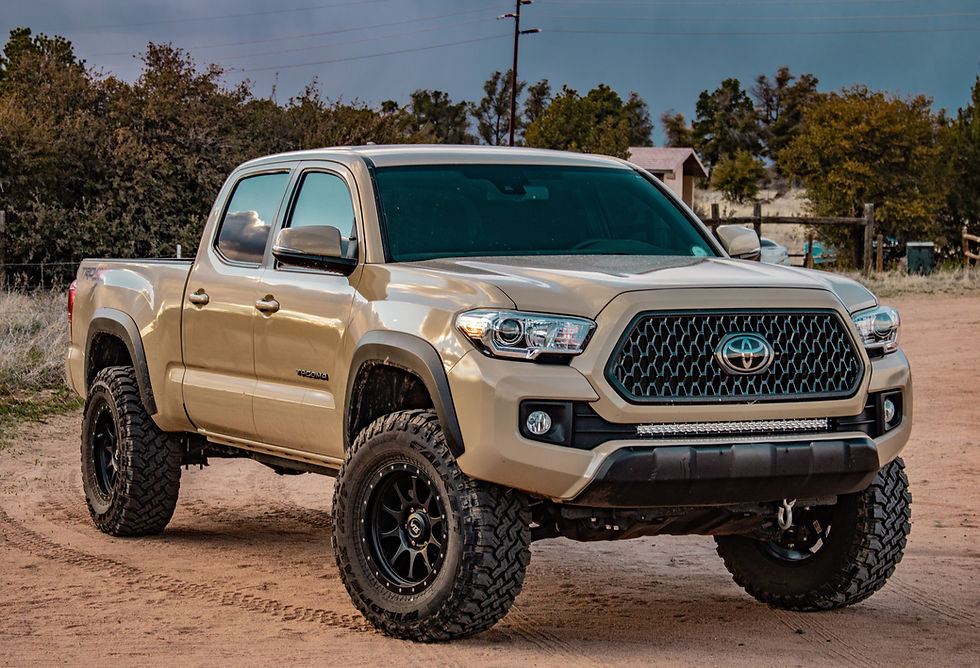
Toyota Diagnostics and Repair in Macomb
Ensure lifelong dependability with proactive maintenance for Twin-Turbo V6 engines and complete high-voltage hybrid system care.
Toyota has redefined the global automotive landscape through a philosophy born not in a garage, but in a textile mill. Sakichi Toyoda founded the company on the principle of jidoka—automation with a human touch—originally applied to looms that would stop automatically if a thread broke. This commitment to stopping the line to ensure quality evolved into the Toyota Production System, or the "Toyota Way." For over a century, the brand has focused on kaizen (continuous improvement) and "Just-in-Time" manufacturing, transforming from a small Japanese startup into the world’s gold standard for mechanical longevity and sensible engineering.
A Legend of Quality & Reliability, but Owners need to be aware
Toyota remains the benchmark for reliability, yet even this titan is navigating significant hurdles as it transitions to more complex powertrains. A primary concern for owners of 2022–2025 Tundra and Sequoia models involves the 3.4L Twin-Turbo V6. Mainstream reports and factory recalls have highlighted issues with machining debris left in the engine during manufacturing, which can lead to main bearing failure and, in extreme cases, a total engine seizure while driving. If you notice a metallic knocking sound or a sudden loss of power in these newer trucks, it often necessitates a complete long-block replacement.
A recent issue highlighting struggles within automotive OEMs belongs to Toyota. There is a persistent issue affecting RAV4, Highlander, and Venza Hybrids from 2021 through 2025. This involves the high-voltage cable connector for the rear traction motor, which is susceptible to corrosion from road salt and moisture. A common symptom is a Hybrid System Malfunction warning on the dash. While Toyota has extended warranties for some years, skeptical owners note that the fix (a redesigned connector cover) may only be a temporary band-aid for a fundamental design flaw that can lead to a $5,000 out-of-warranty repair.
There is also an intensifying debate regarding Toyota’s move away from naturally aspirated engines toward highly stressed, small-displacement turbo units. Some shops, technicians, and customers argue that the 2024–2026 models, including the new Tacoma and Land Cruiser, are entering an era of extreme complication. Symptoms like premature turbo wastegate failure or coolant leaks in the 2.4L i-FORCE engines are seen by some as evidence that the pursuit of fuel efficiency is finally compromising the 300,000-mile engine reputation Toyota built its name on.
Software Integration and The Digital Dashboard
Modern Toyota service now requires as much expertise in network architecture as in mechanical repair. The shift to the latest Toyota Audio Multimedia system and all-digital instrument clusters has introduced a new category of failures not typical to Toyota.
A significant recall affecting over 1.3 million vehicles globally (including 2023–2025 RAV4, Camry, and Tacoma models) addresses a software glitch that causes the 12.3-inch digital instrument cluster to go blank at startup. Beyond this, owners frequently report reboot loops where the infotainment screen freezes or restarts while using wireless Apple CarPlay or Android Auto. These are often tracked back to failed over-the-air (OTA) updates that didn't fully "handshake" with the vehicle's Gateway Module, sometimes leading to a parasitic battery drain that leaves the vehicle dead after sitting overnight.
Our approach to Toyota service focuses on maintaining this delicate balance between legendary hardware and sensitive software. We utilize factory-level Techstream diagnostics to:
Calibrate Safety Sense: We ensure the cameras and radar sensors for Lane Tracing Assist (LTA) and Pre-Collision systems are perfectly aligned, especially after a windshield replacement or front-end service.
Manage Software Versions: We don't just clear codes; we verify that your vehicle's modules are running the most stable firmware to reduce the risk of black screen events and connectivity drops.
Proactive Hybrid Care: We perform specialized inspections of high voltage cable connectors and cooling fans to catch corrosion or debris buildup before they trigger a system-wide shutdown.
We talk about these preventative maintenance and repair like the one(s) below:
Learn About the Services we Offer


