Q&A: How do I care for my classic car over winter or periods of storage?
- Tyler Betthauser
- Jun 29
- 3 min read

We've spent a good amount of time getting a 1957 Thunderbird running again after the customer has struggled over the years to get consistent performance. Our customer struggled with dead batteries, poor starting, and bogging at low speeds. This particular Thunderbird was towed into the shop. Turning the ignition resulted in a crank, but no start. Replacing an auxiliary electric fuel pump, fixing the fuel pump switch wiring, a carb tune, and valve adjustment has made a massive improvement.
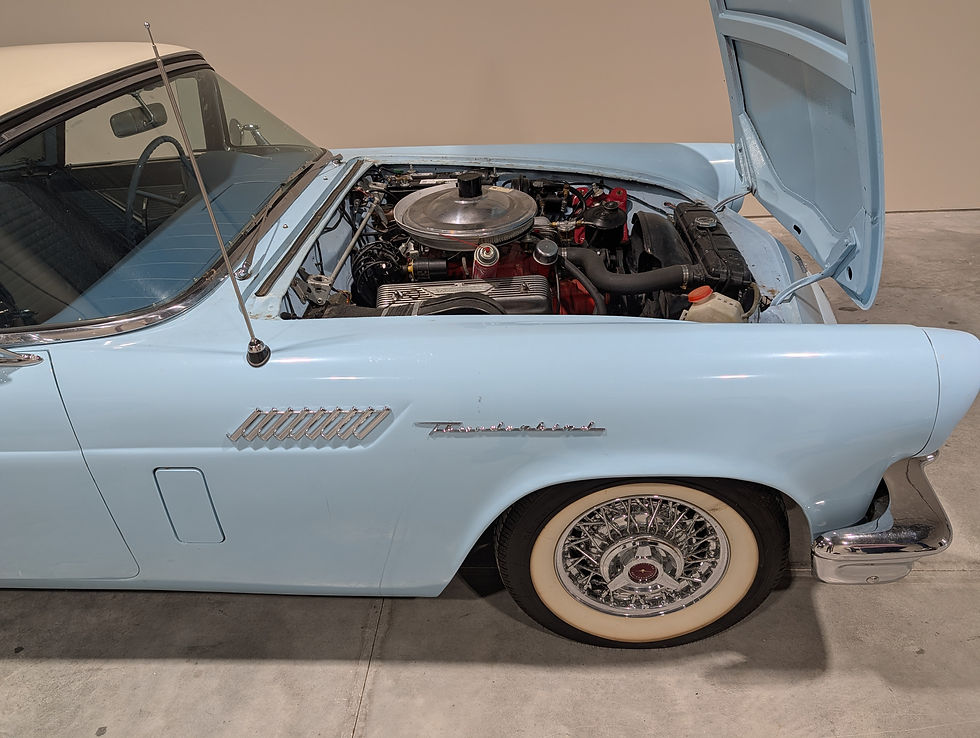
Once running well, our team wanted to create a checklist or document that can be used by our classic car owning customers to make transitioning from use to storage (and vice versa).
Winter & Long Term Storage Checklist: 1957 Ford Thunderbird
Pre-Storage Maintenance
Change the oil and filter. Used engine oil contains combustion acids and moisture that can etch bearings and internal components over time. Filling the engine with fresh oil is a critical mechanical step before any long period of inactivity.
Stabilize the fuel system. Add a fuel stabilizer to a full tank of gas. Keeping the tank completely full prevents condensation from forming inside the steel tank walls.
Run the engine for ten to fifteen minutes after adding the stabilizer so the treated fuel circulates completely through the fuel pump, lines, and carburetor bowl.
Check the engine coolant. Verify the antifreeze is mixed to the correct ratio to prevent freezing during cold winter temperature drops. The older radiators and cast iron blocks in these vehicles are highly susceptible to corrosion, so ensure the coolant is relatively fresh and contains active anti-corrosion additives.
Battery and Electrical
Maintain the battery. If the car is stored in a secure and climate controlled garage, connect a smart battery tender to keep the battery from discharging and sulfating. If the storage area gets extremely cold or is largely unmonitored, remove the battery from the vehicle entirely and store it indoors on a tender.
Wheels and Brakes
Prevent tire flat spotting. Bias ply tires and older style radials will develop flat spots from sitting in one position under the weight of the car. Overinflate the tires by 10 to 15 PSI to help them hold their shape, or park the vehicle on curved tire cradle ramps. If the car will sit for over a year, placing it securely on jack stands relieves the suspension and tires entirely.
Release the parking brake. Leave the mechanical parking brake disengaged. Brake shoes can easily rust and fuse to the drums over the winter, and the mechanical cables can seize inside their sheaths. Chock the wheels with wood or rubber blocks instead to keep the car from rolling.
Interior and Exterior Protection
Clean the vehicle thoroughly. Wash and dry the exterior completely to remove bird droppings, sap, and road grime that will degrade the paint over time. Apply a fresh coat of wax for a protective barrier. Clean the interior thoroughly to remove any food particles, wrappers, or organic material that might attract pests.
Implement pest control. Rodents frequently nest in classic car interiors, engine bays, and exhaust pipes during cold months. Place desiccant packets or baking soda inside the cabin to control moisture and prevent mold. Use deterrents like peppermint oil or specialized rodent repellent pouches around the perimeter of the garage floor. Lightly stuff the exhaust tailpipes with steel wool to prevent mice from crawling inside, but leave a highly visible sticky note on the steering wheel reminding you to remove the steel wool before starting the car in the spring.
Use a breathable car cover. Cover the Thunderbird with a fitted, breathable indoor car cover. Avoid plastic tarps or waterproof outdoor covers if the car is stored indoors. Waterproof materials trap moisture underneath them, which promotes rust and degrades the paint.


Comments