Q&A: Why do you Schedule 3-Hour Blocks of Diagnosis Time?
- Tyler Betthauser
- 4 days ago
- 5 min read


A very common complaint from consumers is that automotive repair shops frequently replace parts needlessly or fail to take the time to understand the physical mechanisms behind the problems exhibited by a vehicle. Customers have reported issues with repair facilities for many years. In a Consumer Reports survey of 5,400 people, nearly 25 percent indicated that the repair did not last or was not performed properly [1]. In 2025, J.D. Power reported in an industry study that 12 percent of respondents noted their repairs were done incorrectly or failed to address the root problem [2]. A 2015 Driver Power study by Auto Express magazine found that slightly over a third of the 61,000 participants stated car dealers failed to accurately identify faults in their vehicles [3].
These studies show a consistent, year-over-year pattern of repair facilities struggling to isolate the root causes of vehicle failures. The reasons behind these numbers are systemic, and understanding them explains why consumer dissatisfaction remains high and how the Car Conservatory approach is designed to break this mold.
One primary reason for inaccurate repairs is that customers often decline dedicated diagnostic time. While shops are sometimes perceived as incompetent, the issue frequently stems from an unwillingness to pay for diagnostic labor and a general misunderstanding of what diagnosis actually entails. Economics plays a significant role in this dynamic. Customers often view diagnostics as time not directly devoted to fixing the vehicle. Shops must do a better job explaining that diagnosis also includes the physical labor required to access specific areas of the vehicle just to perform the testing. When proper diagnosis is skipped or rushed to save costs, shops are forced to default to a parts swapping approach, which is the exact outcome customers want to avoid. A shop's ability to remain profitable is a function of labor time, labor rates, parts costs, and parts margins. Any time spent on diagnostics eats into the overall repair schedule, and it does not make economic sense for a shop to absorb diagnostic labor into their overhead. Because standard repair times are not inclusive of diagnostics, a high rate of inaccurate repairs is inevitable when diagnostic steps are avoided to save the customer money.
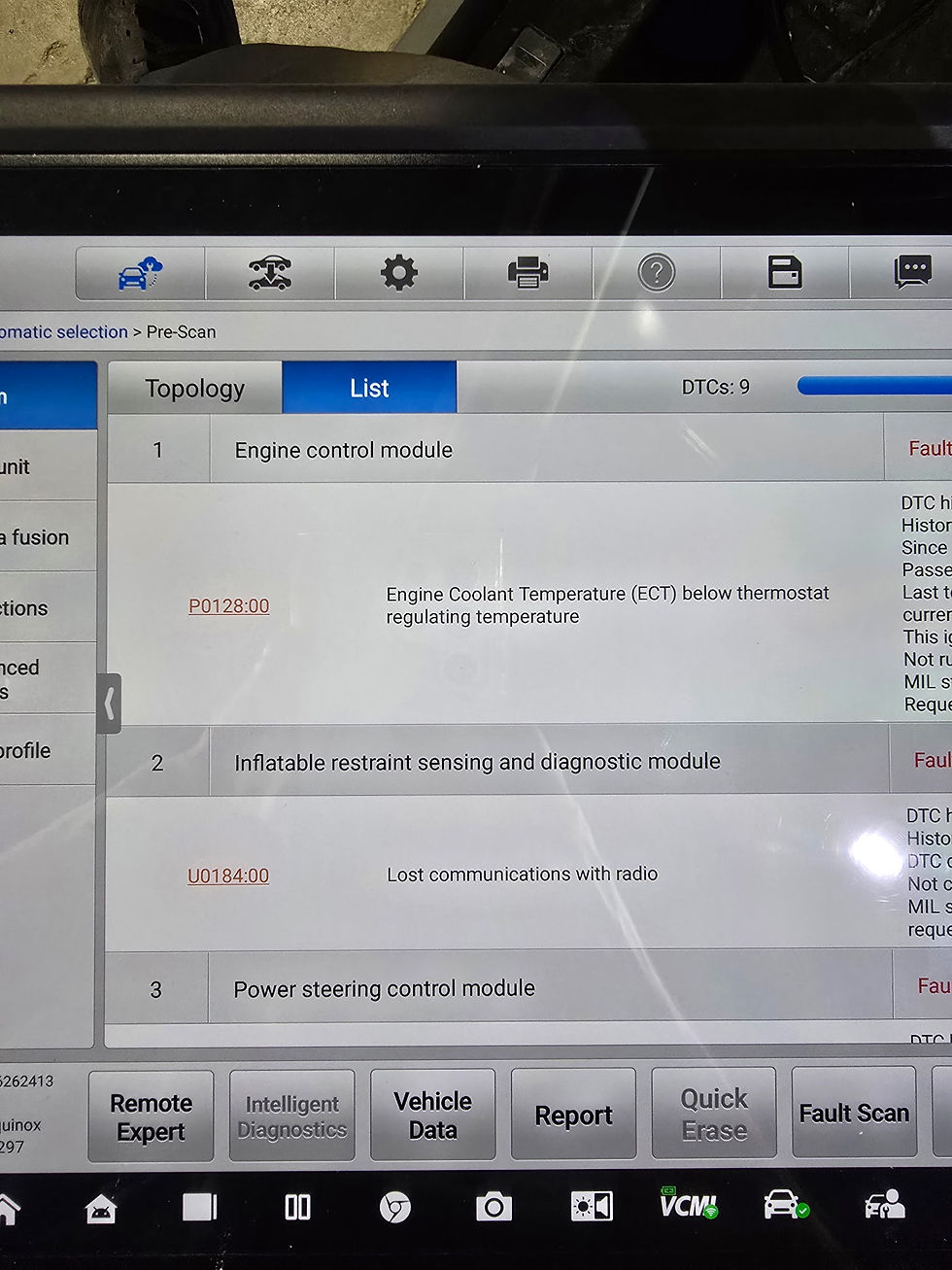
Warranty labor time agreements in the auto repair industry establish the incentive structures that ultimately affect the broader aftermarket. Warranty labor time guides dictate the hours defined by original equipment manufacturers for each type of labor operation. Under all original equipment manufacturer warranty models, diagnostic time is severely underfunded. Instead of paying for a base block of diagnostic time and adding the component replacement time on top, the system does the inverse. Technicians are paid primarily for the time it takes to replace the part, not the time it takes to determine if the part actually needs replacement. This system relies on the assumption that diagnostic procedures are so well defined in the service manuals that testing should not take long. That is a highly flawed assumption given the complexity of modern vehicles. Service manuals are typically written once and are rarely updated as new, real-world conditions arise. While technical service bulletins and recalls sometimes address one-off issues, initial service manuals are narrowly scoped and often published before long-term engineering validation is complete. These documents rely on design failure mode and effects analyses that are only as good as the engineering assumptions made years prior.
For example, General Motors might allocate an eight-hour base labor time for an engine replacement, but allow the technician to claim only 0.3 hours for diagnosing the condition beforehand. Any additional time the technician spends verifying whether the engine truly requires replacement is effectively unpaid labor. Ascertaining the true condition of an engine could easily take three to four hours, meaning there is very little financial incentive for a technician to perform a thorough diagnosis. Because many technicians spend their formative years employed by dealerships, these poor diagnostic habits are perpetuated throughout the industry. Automakers have cultivated an incentive structure that no longer makes sense given modern vehicle architectures and a languishing diagnostic infrastructure.
Furthermore, service manuals alone are insufficient to guide technicians through the entire breadth of the diagnostic process. Whether operating at a dealership or an independent facility, shops must ensure comprehensive diagnostic strategies are actively trained. Being a competent diagnostician requires an entirely different skill set than being capable of safely replacing a physical part.
Understanding automotive design, comprehending the physics of interconnected systems, isolating specific components to eliminate variables, and interpreting live data are all essential skills for ensuring the correct part is replaced at the right time. A technician must also have the capacity to recognize when the service manual is wrong or when a procedure does not exist at all. Industry feedback tells a consistent story. Automakers are failing to train their technicians due to budget and time constraints, independent shops unrealistically expect new hires to arrive with comprehensive knowledge, and the rapid evolution of vehicle architectures is outpacing the industry's capacity to learn them.
The Car Conservatory approach is structured to address these systemic failures directly, providing a superior outcome for customers while maintaining overall affordability. While a consumer could certainly find a lower initial estimate down the street and hope for a lucky guess, the surveys mentioned earlier demonstrate the risks of that approach.
The Car Conservatory model puts diagnostics first. Aside from painfully obvious issues that require minimal cognitive effort, such as an oil change or a tire rotation, the shop mandates a three-hour block of diagnosis for complex jobs.
While mandating a three-hour diagnostic block might seem contradictory to the fact that customers avoid diagnostic fees due to upfront costs, this approach is mathematically cheaper in the long run. Paying for a guaranteed three hours of thorough investigation upfront prevents the customer from paying for one hour of rushed diagnosis followed by the cost of three unneeded parts and multiple return visits. Furthermore, this three-hour block is not simply a technician plugging in a computer and reading data. It accounts for the physical labor required to get the vehicle into the service bay, perform dynamic testing in a test drive, disassemble necessary components to gain physical access for electrical or mechanical testing, perform the necessary tests, and properly reassemble the vehicle.
These three hours are essential to establish the true root cause of a failure. This block allows technicians the freedom to thoroughly interrogate an entire system without a shot clock pushing them to cut corners. Establishing a base diagnosis time ultimately prevents the surprise bills that occur at the end of a repair when parts are replaced endlessly through guesswork. Customers receive an exceedingly detailed account of the diagnostics performed and the exact data used to determine the point of failure. The goal is to ensure that any increase in price above the initial three-hour diagnostic block is strictly related to the necessary part cost. While exceptions exist, this mandated diagnostic period aims to beat the standard industry clock where possible and ultimately reduce the overall financial burden of misdiagnosis.
Sources
[1] Consumer Reports. (2012). High prices, poor repairs lead top service gripes. https://www.consumerreports.org/cro/2012/12/high-prices-poor-repairs-lead-top-service-gripes/index.htm
[2] Dunham, N. (2025). Studies, reports reveal persistent dealer pain points. WardsAuto. https://www.wardsauto.com/news/studies-reports-reveal-persistent-dealer-pain-points/798929/
[3] AM Online. (2015). Failure to find the fault is the biggest complaint consumers have with car dealers. https://www.am-online.com/news/market-insight/2015/08/17/failure-to-find-the-fault-is-the-biggest-complaint-consumers-have-with-car-dealers

Comments