An Auto Repair Case Study: 2019 Chevy Equinox Cooling Fan Runs After Shutdown
- Tyler Betthauser
- Feb 13
- 3 min read

Updated: Feb 13
The Complaint
The customer states that the cooling fan on their 2019 Chevy Equinox (1.5L/2.0L Turbo) continues to run at high speed for up to 20 minutes after the engine is turned off. The fan eventually stops when the vehicle's retained accessory power (RAP) times out. They are concerned about battery drain and causing damage to the engine. Someone had previously replaced the Engine Coolant Temperature (ECT) sensor, but the issue persists.
The Scan Data
Upon connecting the scanner, we retrieved the following relevant Diagnostic Trouble Codes (DTCs) from the Engine Control Module (ECM):
P0128:00 – Engine Coolant Temperature (ECT) Below Thermostat Regulating Temperature.
We also noted several historical communication (u-codes) and low voltage codes (B1325) in other modules, likely artifacts from the battery being drawn down by the fans or previous service disconnects.
Does this sound like your car?
The Car Conservatory is here to expertly diagnose and repair your vehicle. Take advantage of our Concierge Car Care model to keep you mobile why your car is seamlessly fixed.
Our Analysis
The Mechanics of P0128
The P0128 code is the smoking gun here. This code sets when the ECM detects that the engine has not reached its operating temperature (usually around 176°F or 80°C) within a predicted time frame.
On the 2019 Equinox, the fail-safe logic for this code is aggressive, or maybe just not sophisticated enough. When the ECM realizes the engine isn't warming up, it assumes it has lost control of thermal regulation. To protect the engine from a potential overheat it cannot see, it defaults to a protection mode. This commands the cooling fans to 100% duty cycle, even after the key is off, to dissipate heat it assumes is there.
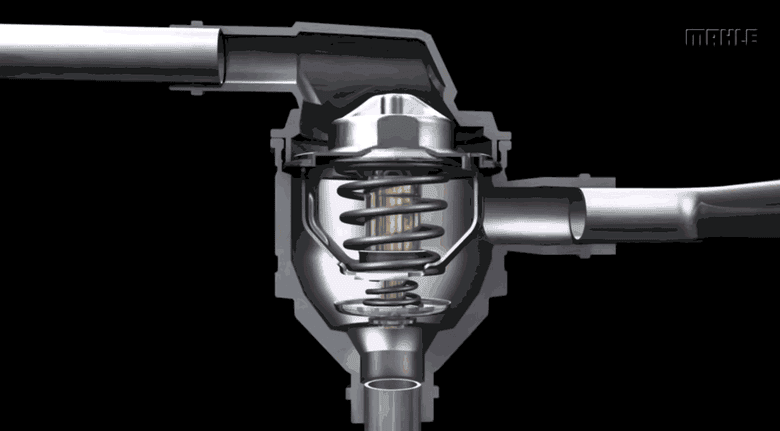
The previous person likely saw the coolant temperature code and replaced the sensor. This is a classic error. The sensor was working perfectly; it was accurately reporting that the engine was running too cold. The failure was mechanical, not electrical. The thermostat was physically stuck in the open position, allowing coolant to circulate through the radiator immediately upon startup, preventing the engine from warming up.
Why the Sensor is Often Blamed
This particular case is interesting because modern diagnostic data demonstrates how misleading generic code descriptions can be. The code description mentions "ECT," leading many to swap the sensor. However, a technician needs to verify the data first. Most scan tools can read the coolant and engine temperature separately during a drive cycle.
If you look at the freeze frame data for P0128, you will almost always see the start up intake air temperature and the engine coolant temperature very close together, but after 15 minutes of run time, the ECT barely climbs above 160°F. If the sensor were failed, it would typically read -40°F (open circuit) or roughly 290°F (short to ground). A reading that is simply low but realistic points to the thermostat 99% of the time.
What might be more interesting is the low mileage failure It is unusual to see a thermostat fail at 46,000 miles, but this highlights a nuance in modern automotive maintenance: age versus mileage.
DEX-COOL coolant has a 5-year or 150,000-mile service life. This 2019 vehicle is now outside that 5-year window. As the corrosion inhibitors in the coolant degrade, they can cause the rubber seal on the thermostat valve to swell or delaminate. This rubber debris gets lodged in the valve seat, preventing it from closing fully. It is important to perform a coolant flush (which The Car Conservatory) if the vehicle isn't driven much every few years or so.
Additionally, on these GM Global A architectures, the B1325 code (Control Module Power Circuit Low Voltage) seen in the body control module scan often appears alongside this issue. While often dismissed as a symptom of the fan draining the battery, some logic suggest that consistent low voltage during cranking (from a weak AGM battery) can sometimes corrupt the learned values for the thermostat heater control (if equipped), causing the ECU to misinterpret the valve position. However, in this case, the P0128 is a hard mechanical fault.
The Fix
Replacing the thermostat assembly resolved the issue. The ECM was cleared of codes, and the fan operation returned to normal logic (shutting off with the engine).
Summary
Symptom: Fan runs 20 mins post-shutdown.
Cause: Thermostat stuck open (P0128).
Why the Fan Runs: ECM fail-safe strategy to prevent unmonitored overheating.
Lesson: Don't shoot the messenger (the sensor). Trust the data that says the engine is actually cold.
Stop Guessing. Start Driving.
Don't let a check engine light turn into a guessing game. We provide accurate, root-cause diagnostics and comprehensive care for your vehicle. Experience the difference of true concierge service with The Car Conservatory.


Comments